When temperatures plunge to -25°F outside your 1900s homesteader cabin near Downtown Jackson, those original single-pane windows become expensive liabilities. Historic homes throughout Jackson Hole—from the Western frontier storefronts flanking the Town Square Antler Arches to the early settler residences in South Park—face a brutal choice each winter: compromise your home’s irreplaceable character with modern replacements, or watch your Lower Valley Energy bills climb while drafts whistle through hand-hewn window frames.
There’s a third path. Interior shutters designed for historic homes deliver the thermal protection your century-old structure desperately needs without triggering headaches from the Teton County Historic Preservation Board. This guide walks you through exactly how to match period-appropriate window treatments to your specific architectural heritage—whether you’re preserving a cabin within sight of Miller Park or maintaining one of the original commercial buildings that defined early Jackson.
Why Historic Jackson Hole Homes Hemorrhage Heat Through Windows
Your pre-1940s Jackson Hole home wasn’t built for modern energy standards—it was built for survival with the materials available. Understanding why your windows underperform helps you select the right shutter solution.
The Single-Pane Problem in Teton County Winters
Historic homes in Flat Creek and throughout the valley typically feature original single-pane glass with R-values around 0.9 (Source: U.S. Department of Energy, 2023). Compare that to modern double-pane windows at R-2 to R-3, and you’re looking at heat loss rates 200-300% higher than contemporary construction. When Jackson Hole’s average January low hits -4°F (Source: Western Regional Climate Center, 2024), that gap translates directly into comfort and cost.
Why Window Replacement Often Fails Historic Properties
Ripping out original windows seems logical until you factor in three critical issues. First, replacement windows rarely match historic proportions—modern manufacturing can’t economically replicate the narrow muntins and wavy glass that define your home’s character. Second, Teton County’s historic district guidelines may restrict visible alterations to contributing structures. Third, you lose embodied carbon and craftsmanship that simply cannot be reproduced at any price.
| Window Solution | R-Value Improvement | Historic Compliance | Reversibility |
|---|---|---|---|
| Full Window Replacement | +1.5 to +2.5 | Often Restricted | Permanent |
| Storm Windows (Exterior) | +1.0 to +1.8 | May Require Review | Removable |
| Interior Plantation Shutters | +0.7 to +1.2 | Typically Permitted | Fully Reversible |
| Insulated Interior Shutters | +1.5 to +2.8 | Typically Permitted | Fully Reversible |
Selecting Period-Appropriate Interior Shutters for Your Home’s Era
Not all shutters suit all historic styles. Your 1890s frontier storefront near the Town Square Antler Arches demands different treatment than a 1920s homesteader cabin in South Park. Here’s how to match your shutters to your architecture.
Western Frontier Commercial Buildings (1880s-1910s)
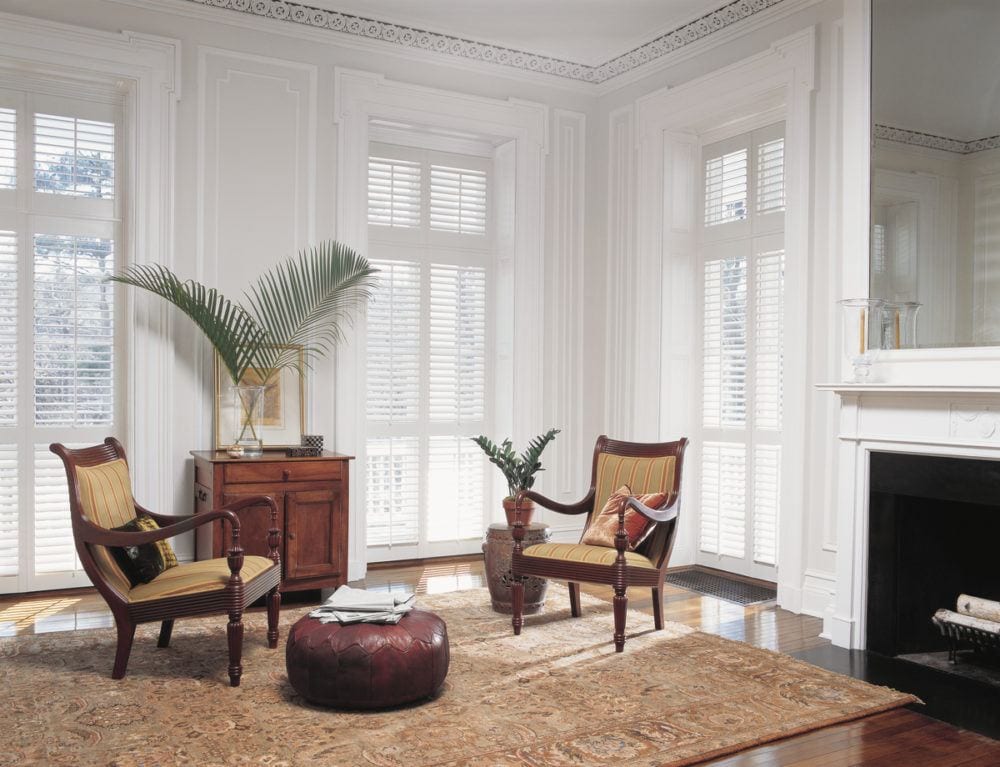
Jackson’s original commercial district featured tall, narrow windows with simple trim profiles. Appropriate interior shutters for these structures include:
- Full-height solid panel shutters in painted wood finishes
- Narrow louver plantation shutters (2.5″ louvers maximum) with traditional tilt rods
- Bi-fold configurations for wide storefront windows
- Period-correct hardware in black iron or aged brass finishes
The key is restraint. Avoid tropical-width 4.5″ louvers that read as anachronistically modern. Your Downtown Jackson storefront conversion deserves the same visual discipline that made the original architecture endure.
Early Homesteader Cabins and Residences (1900s-1930s)
The log and frame cabins scattered through Flat Creek and surrounding areas typically featured smaller, utilitarian windows positioned for light rather than views. Appropriate shutter styles include:
- Solid raised-panel shutters mimicking original board-and-batten aesthetics
- Narrow louver shutters (2.5″-3″) in natural wood stains
- Café-style half-height shutters for privacy without blocking scarce winter daylight
- Interior storm shutter hybrids with insulated cores
“The most historically sensitive approach treats shutters as furniture, not architecture. They should feel like a considered addition by an owner who respects the building’s bones, not a contractor who wants to modernize everything.” — National Trust for Historic Preservation, Window Preservation Standards Bulletin, 2022
Thermal Performance Considerations for Wyoming Winters
Beyond aesthetics, your shutters need to actually reduce heat loss. Standard plantation shutters provide modest R-value improvements of 0.7 to 1.2 (Source: Lawrence Berkeley National Laboratory, Window Attachments Study, 2021). For serious cold-climate performance, consider these upgrades:
- Insulated panel cores: Rigid foam inserts boost R-values to 2.5-2.8
- Magnetic edge seals: Eliminate infiltration around shutter perimeters
- Thermal break frames: Prevent conductive losses through mounting hardware
- Low-e fabric backing: Reflects radiant heat back into your living space
These enhancements can reduce window heat loss by 45-50% (Source: ENERGY STAR, Home Upgrade Recommendations, 2023)—meaningful savings when your Lower Valley Energy bills spike during January cold snaps.
Installation Approaches That Protect Historic Fabric
How you install matters as much as what you install. Irreversible damage to original window casings, trim, or plaster diminishes your home’s value and violates preservation best practices.
Reversible Mounting Techniques
Professional installers working with historic Jackson Hole homes should never drill into original woodwork without explicit owner approval. Preferred approaches include:
- Friction-fit frames: Custom-milled wooden frames pressure-fit inside window reveals
- Magnetic mounting: Steel plates adhesively attached to frames, shutters snap on/off
- Existing hardware reuse: Historic homes often have original shutter pintles that accept period-appropriate replacement shutters
Document everything before installation. Photograph your window casings, measure precisely, and retain any original hardware removed during the project. Future owners—and preservation officers—will thank you.
Working With Teton County Historic Guidelines
If your home sits within a designated historic district or holds individual landmark status, interior modifications typically fall outside regulatory review—but verify before proceeding. The Teton County Planning Department maintains current guidelines, and a 15-minute phone call prevents months of correction headaches. Interior shutters rarely trigger review because they’re not visible from public rights-of-way, but window-mounted hardware might.
Cost and Return on Investment for Heritage Window Treatments
Quality interior shutters represent a significant investment. Understanding realistic costs and payback periods helps you budget appropriately.
Pricing Factors for Historic Home Applications
Standard plantation shutters in Jackson Hole typically run $25-45 per square foot installed (Source: National Association of Home Builders, Remodeling Cost Data, 2024). Historic applications add 15-30% for:
- Custom sizing for non-standard window dimensions
- Period-appropriate wood species and finishes
- Specialized hardware matching existing home aesthetics
- Reversible installation techniques requiring additional labor
A typical historic home in Downtown Jackson with 12 windows might invest $8,000-$15,000 for comprehensive interior shutter installation. Insulated options with thermal upgrades push toward the higher end.
Energy Savings and Payback Period
At current Lower Valley Energy residential rates averaging $0.11 per kWh (Source: Lower Valley Energy, 2024 Rate Schedule), reducing window heat loss by 45% yields annual savings of $300-$600 for a 2,000 square foot historic home with typical glazing ratios. Simple payback ranges from 15-35 years on energy alone—but that calculation ignores the preservation value of keeping original windows intact and the comfort improvements that make your home actually livable during Teton County winters.
Finding Heritage-Sensitive Installation Partners in Jackson Hole
Not every window treatment company understands historic preservation requirements. Vet potential partners carefully.
Questions to Ask Before Hiring
When interviewing installers for your Flat Creek cabin or South Park residence, probe their historic experience directly:
- “Show me three completed projects on pre-1940 structures in Teton County.”
- “How do you handle non-square window openings in settled buildings?”
- “What reversible mounting options do you offer?”
- “Will you provide detailed documentation of existing conditions before work begins?”
Installers who hesitate or pivot to modern solutions may lack the specialized knowledge your historic home demands.
Schedule Your Heritage-Sensitive Consultation
Protecting your historic Jackson Hole home’s windows shouldn’t mean sacrificing its soul. The right interior shutters honor your building’s century of character while delivering the thermal performance Wyoming winters demand. Schedule a heritage-sensitive design consultation with specialists who understand the difference between a frontier storefront and a homesteader cabin—and who treat your home’s history as the asset it truly is.
Frequently Asked Questions
Will interior shutters damage my home’s original window trim?
Properly installed interior shutters use reversible mounting techniques that avoid penetrations into historic fabric. Friction-fit frames, magnetic mounting systems, and reuse of existing hardware pintles all protect your original trim while providing secure shutter attachment. Always request documentation of mounting methods before approving installation, and verify your installer’s experience with pre-1940 structures specifically.
How much can interior shutters really reduce my Lower Valley Energy heating bills?
Standard plantation shutters reduce window heat loss by 25-35%, while insulated shutter systems with edge seals achieve 45-50% reductions (Source: Lawrence Berkeley National Laboratory, 2021). For a typical 2,000 square foot historic Jackson Hole home, this translates to $300-$600 in annual heating savings at current utility rates. The improvement is most noticeable during extreme cold snaps when your single-pane windows would otherwise act as thermal sieves.
Do I need Teton County approval to install interior window shutters?
Interior modifications typically fall outside historic district review requirements because they’re not visible from public rights-of-way. However, if your installation involves exterior-visible hardware or affects designated character-defining features, preliminary consultation with Teton County Planning prevents complications. A brief phone call confirming your specific property’s status takes 15 minutes and provides documentation should questions arise later.
Ready to protect your historic home’s value while solving its energy challenges? Schedule a heritage-sensitive design consultation with our Jackson Hole specialists who understand the unique requirements of Teton County’s irreplaceable historic structures.
Frequently Asked Questions
Will interior shutters damage my home’s original window trim?
Properly installed interior shutters use reversible mounting techniques that avoid penetrations into historic fabric. Friction-fit frames, magnetic mounting systems, and reuse of existing hardware pintles all protect your original trim while providing secure shutter attachment. Always request documentation of mounting methods before approving installation, and verify your installer’s experience with pre-1940 structures specifically.
How much can interior shutters really reduce my Lower Valley Energy heating bills?
Standard plantation shutters reduce window heat loss by 25-35%, while insulated shutter systems with edge seals achieve 45-50% reductions (Source: Lawrence Berkeley National Laboratory, 2021). For a typical 2,000 square foot historic Jackson Hole home, this translates to $300-$600 in annual heating savings at current utility rates. The improvement is most noticeable during extreme cold snaps when your single-pane windows would otherwise act as thermal sieves.
Do I need Teton County approval to install interior window shutters?
Interior modifications typically fall outside historic district review requirements because they’re not visible from public rights-of-way. However, if your installation involves exterior-visible hardware or affects designated character-defining features, preliminary consultation with Teton County Planning prevents complications. A brief phone call confirming your specific property’s status takes 15 minutes and provides documentation should questions arise later.
What shutter louver width looks most authentic on pre-1940 Jackson Hole homes?
Narrow louvers between 2.5 and 3 inches maintain period-appropriate proportions for early 20th century Western frontier architecture. Wider 4.5-inch plantation louvers popular in tropical and contemporary designs read as anachronistically modern against the simple trim profiles and smaller window openings typical of Jackson Hole’s historic homesteader cabins and original commercial storefronts.
Can interior shutters be installed on windows with irregular shapes from building settlement?
Experienced historic home installers custom-mill shutter frames to accommodate the out-of-square conditions common in settled century-old structures. Rather than forcing standard rectangular shutters into parallelogram-shaped openings, proper technique involves precise field measurement and shop fabrication of frames that follow your window’s actual geometry while maintaining visually level louver lines.